
By the RedLightPainLab Research Team · Published June 9, 2026 · Last updated June 9, 2026
Affiliate disclosure: Some links below are affiliate links. We may earn a commission at no extra cost to you. We are independent; rankings are based on our methodology and are never paid for.
The best red light therapy for arthritis is a device that delivers both red and near-infrared light, has enough power to reach the joint, and comes in a form factor that fits where your arthritis is. For deep joints like the knee or hip, prioritize near-infrared in a panel; for the hands and fingers, a small panel or a flexible wrap is enough. Our independent overall pick is the RLT Home TotalSpectrum.
Table of Contents
Quick picks
- Best overall for arthritis: RLT Home TotalSpectrum (multi-band red and near-infrared, suits deep joints and hands).
- Best for the hands and fingers: a small panel or a flexible wrap with red and near-infrared light.
- Best for deep joints (knee, hip): a higher-power near-infrared panel.
- See the full scored reviews: our top 5 devices for pain.
What to look for in a red light device for arthritis
Five things matter more than the brand name.
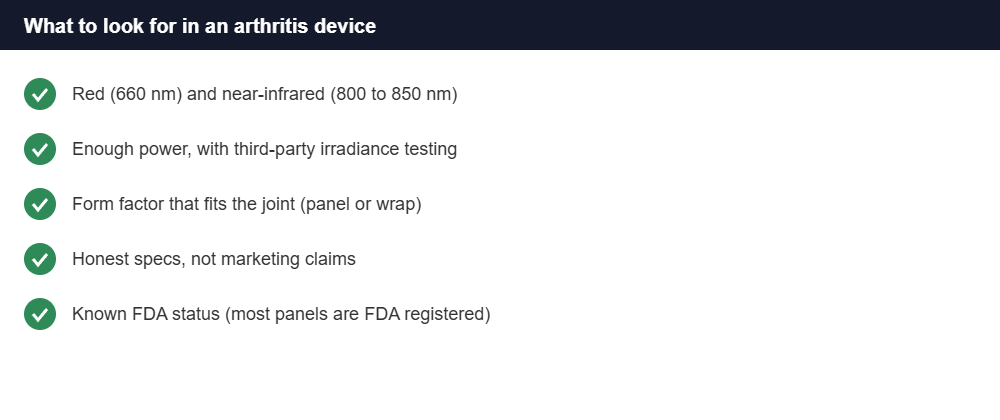
- Wavelengths. You want both red (about 630 to 660 nm) for surface joints and near-infrared (about 800 to 850 nm and up) for deeper ones. Finger joints are shallow; the knee and hip are deep.
- Power (irradiance). Home units are weaker than clinic machines, so adequate output at a usable distance matters. Look for third-party-tested numbers, not marketing claims.
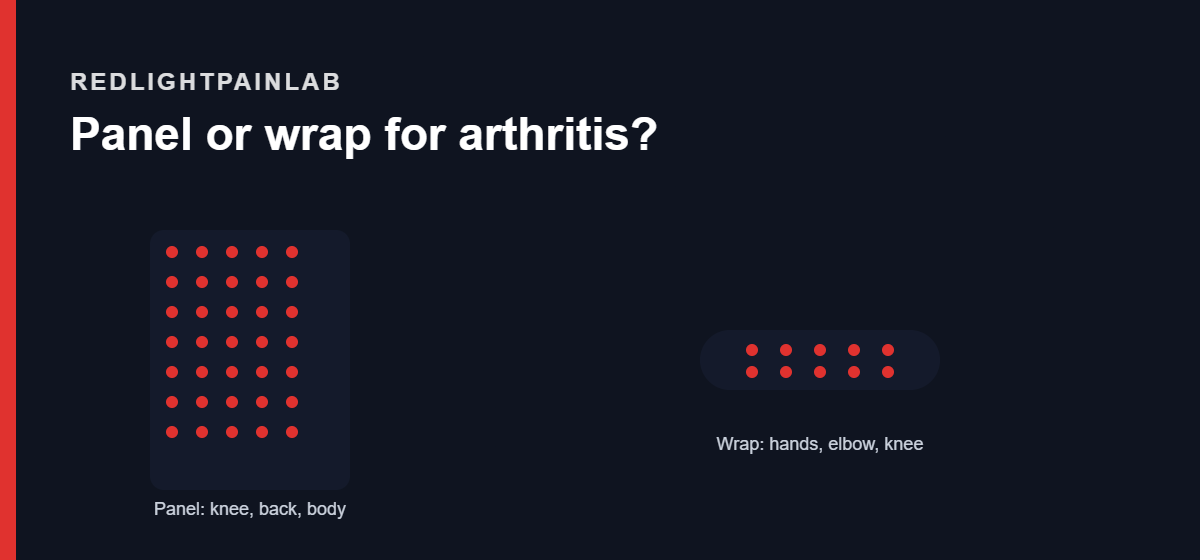
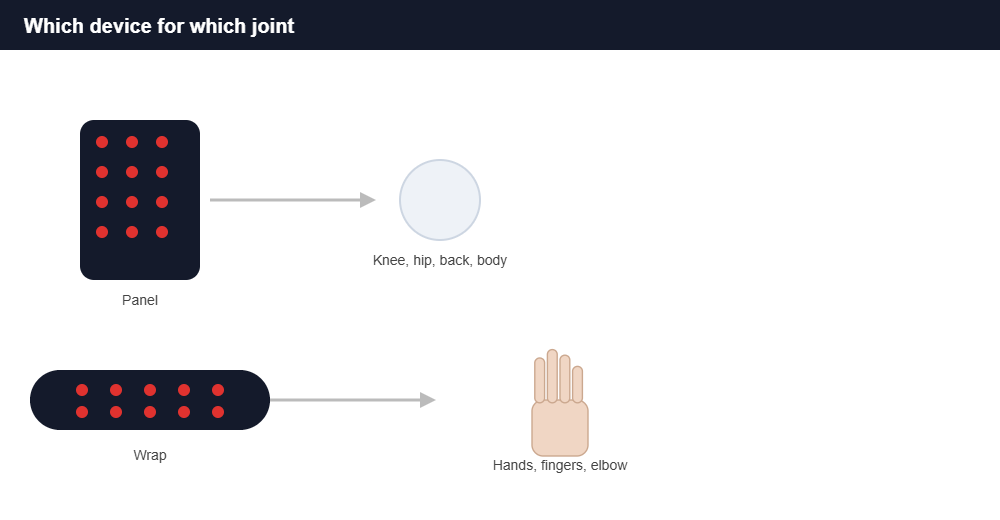
- Form factor. A flat panel suits the knee, back, or whole body; a wrap or sleeve contours around a hand, elbow, or knee for even coverage and is often the better arthritis choice.
- Third-party testing. Independent irradiance and spectral testing is the honest signal that a device delivers what it claims.
- Regulatory status. Most red light panels are FDA registered as general wellness products, not FDA cleared. A few medical LED or laser devices carry 510(k) clearance. Registration is paperwork, not proof of benefit.
Our top picks for arthritis
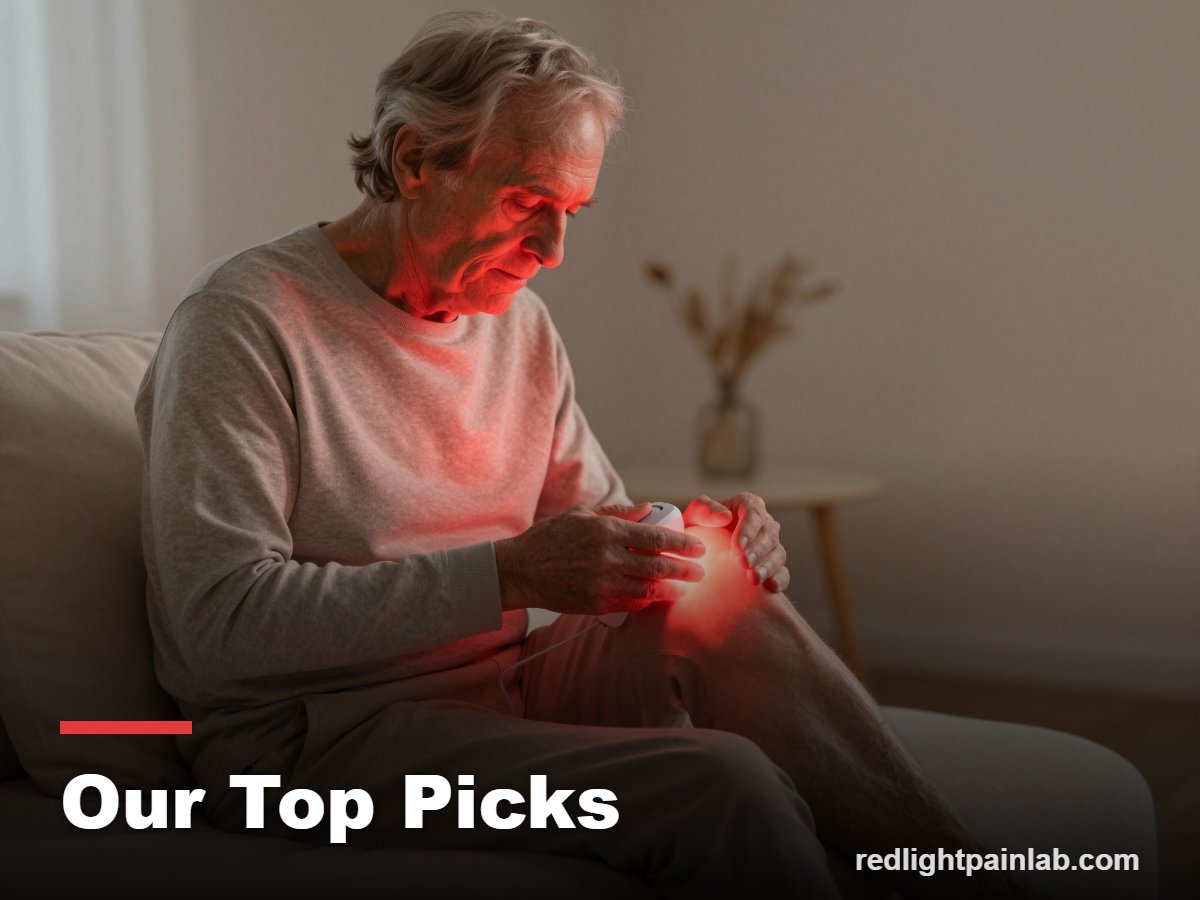
These are our current top-ranked pain devices, framed for arthritis. Full scored reviews, irradiance data, and current pricing are on our device rankings page.
| Device | Best for arthritis | Deep near-infrared | Review |
|---|---|---|---|
| RLT Home TotalSpectrum | Overall pick; deep joints and hands | Yes (1064 nm) | See review |
| PlatinumLED BioMax | Larger panels, back and knees | No | See review |
| Helio Cure Spark | Multi-wavelength coverage | Yes (1064 nm) | See review |
| Rouge Care G4 Pro | Most wavelength bands | Yes (1060 nm) | See review |
| Rojo Refine 900 | Full-body sessions | No | See review |
Rankings reflect our scoring methodology and are never influenced by commission. Specs and prices change; check the current details on each review.
Which device for which joint?
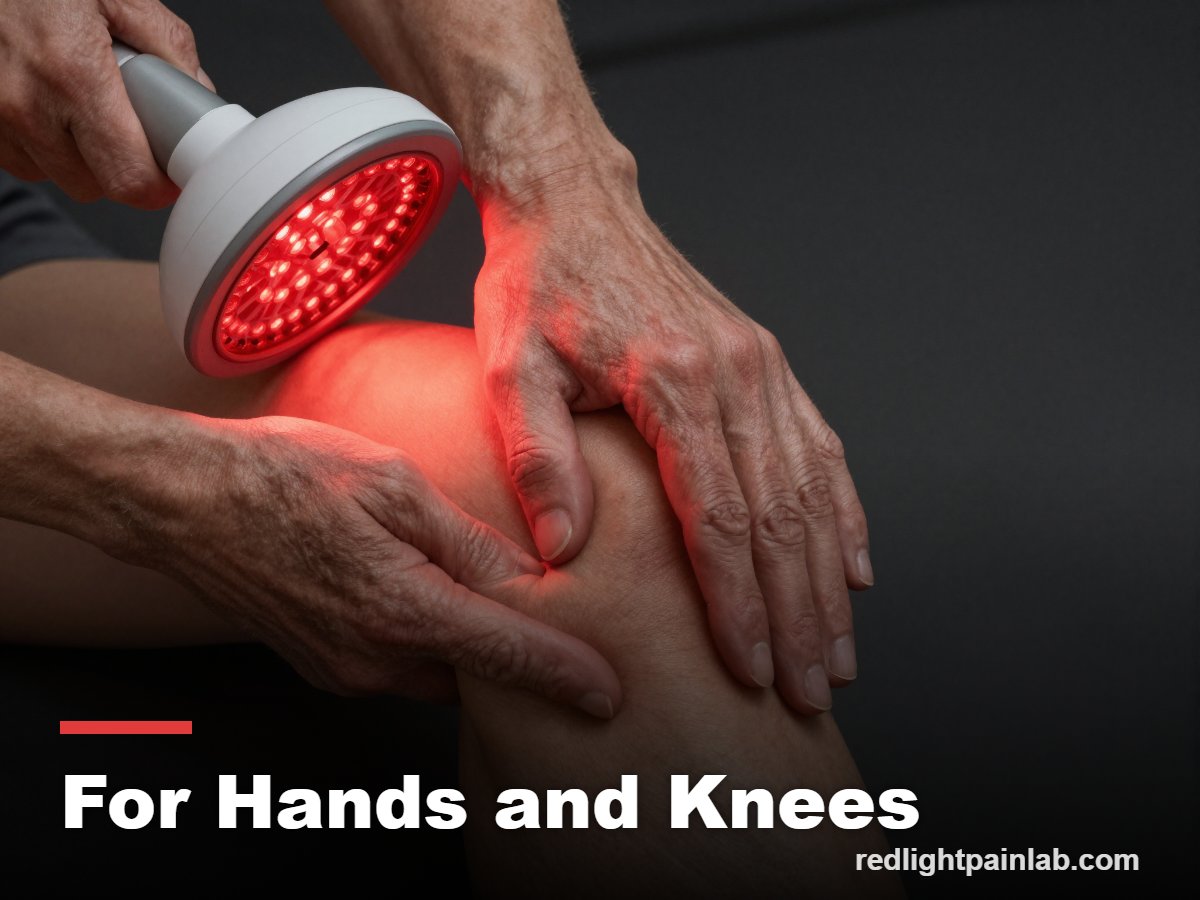
Hands and fingers: a small panel or a flexible wrap, with red and near-infrared. You do not need deep penetration here, so do not overpay for a big panel. See our hand arthritis guide.
Knee and hip: a higher-power near-infrared panel, because these joints sit several centimeters deep. See our knee guide.
Multiple joints or whole body: a larger panel saves time, but make sure it still has strong near-infrared output.
Does red light therapy actually help arthritis?
Modestly, and it depends on the type. For rheumatoid arthritis, a Cochrane review found short-term cuts in pain and morning stiffness; for knee osteoarthritis, meta-analyses found a modest pain reduction; for hand osteoarthritis the evidence is weak. We cover the studies in detail in our guides to arthritis pain, rheumatoid arthritis, and osteoarthritis. Buy a device expecting symptom relief alongside exercise and medical care, not a cure.
Real Red Light Therapy Experiences on Reddit
Real, unpaid discussions about choosing red light devices for arthritis on Reddit. Anecdotal context, not proof. Links go to the original threads.
r/redlighttherapy
Recommend me a device for joint pain?
People with arthritis and joint pain compare panels and handhelds when choosing a device.
r/redlighttherapy
Red light for arthritis in hand
Hand-arthritis users discuss which device formats work best for finger joints.
r/Osteoarthritis
Osteoarthritis patients share what helped and which devices they used.
Disclaimer: The Reddit posts above are third-party personal discussions shared by individual users. They are anecdotal, not medical evidence. Results vary and are not verified or endorsed by RedLightPainLab. Always consult a qualified professional before starting red light therapy.
Frequently asked questions
What is the best red light therapy for arthritis?
A device with both red and near-infrared light, adequate power, and a form factor that fits your joints, a small panel or wrap for hands, a stronger near-infrared panel for the knee or hip. Our independent overall pick is the RLT Home TotalSpectrum.
Are wraps better than panels for arthritis?
For the hands, elbows, and knees, a wrap that contours around the joint gives more even coverage and is easy to use. For the back or whole body, a flat panel is more practical. Many people end up using a panel for big areas and a wrap for the hands.
Does it need to be FDA cleared?
Not necessarily. Most red light panels are FDA registered as general wellness products, not cleared. A few medical LED or laser devices carry 510(k) clearance. Clearance is a useful signal but not required, and registration alone is not proof a device works.
What wavelength should an arthritis device have?
Both red (around 630 to 660 nm) and near-infrared (around 800 to 850 nm and up). Near-infrared reaches deeper joints like the knee; red is fine for shallow finger joints.
Are red light devices HSA or FSA eligible?
Some are, depending on the device and your plan. Check the product listing and your HSA or FSA administrator before buying, as eligibility varies.
Medical disclaimer: This article is for informational purposes only and is not medical advice. Always consult a qualified healthcare professional before starting any new treatment.
Affiliate disclosure: We earn a small commission when you buy through our links, at no extra cost to you. Rankings are based on our scoring methodology and are never influenced by commission rates.