
Can red light therapy help with migraines? Possibly, but this is the one pain topic where you have to be careful, because light and migraine have a complicated relationship. Two things are true at once. First, shining red light into your eyes can actually trigger or worsen a migraine, red and blue light are the most aggravating colors for migraine sufferers, which is why the color studied for visual relief is green, not red. Second, red and near-infrared light applied to the tissue of your head, neck, and shoulders (with your eyes protected) is a different thing entirely, and there the early evidence is mildly promising but low-certainty. So red light therapy is not a proven migraine cure, it must be used correctly to avoid making things worse, and it is best thought of as an experimental add-on, not a frontline treatment.
Table of Contents
First, the eye warning that most articles skip
Almost every page selling you red light for migraines forgets to mention this, so we will lead with it. For people with migraine, light coming into the eyes can make the pain worse, and the color matters. Research from Harvard Medical School and the lab of Rami Burstein found that blue and red light generate the largest pain-related signals in the retina and brain in migraine patients, while green light generates the smallest. In other words, staring at a red light during a migraine is one of the worst things you can do.
That same line of research is why green light, not red, is the color with actual human evidence for visual migraine relief. In an open-label study of 181 migraine patients, two hours of exposure to a narrow band of green light during attacks improved headache perception in about 55% of reported events. So if your interest is shining a light to calm a migraine through your eyes, the evidence points to green light, not red.
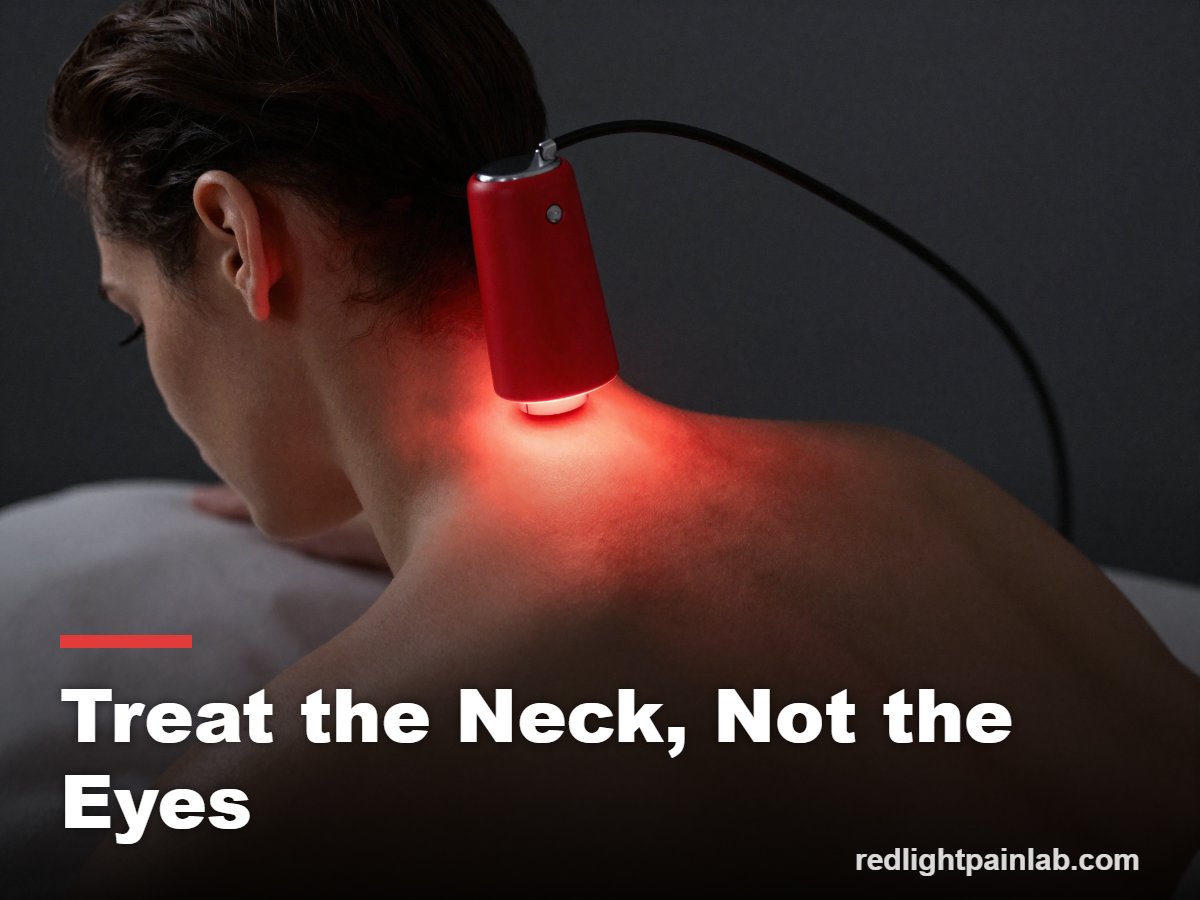
Red light therapy for migraine is a completely different idea: applying red and near-infrared light to the tissue of the head, neck, temples, or shoulders, with the eyes shielded, to act on muscles, nerves, and blood flow, not through the visual system. Keep those two ideas separate and you will avoid the single biggest mistake people make here.
What the research actually shows
Honestly? Not much yet, and what exists is low-certainty. A systematic review of randomized clinical trials looking at photobiomodulation (the clinical name for red and near-infrared light therapy) for primary headache found that it did have a clinically meaningful effect on headache pain compared with a sham (placebo) device. But the reviewers were candid: the estimates were imprecise and the overall certainty of the evidence was graded as low to very low, meaning more and better trials are needed before anyone can call this proven (Pires de Sousa et al., systematic review of RCTs, 2022).
For comparison, the evidence base for red light therapy in joint and muscle pain (knee osteoarthritis, for example) is far deeper than it is for migraine. Migraine is an emerging, hopeful, but unproven use. Treat any site claiming “72% fewer migraines” with healthy skepticism, those numbers come from small individual studies or marketing, not from a solid body of evidence.
How red light therapy might help migraines
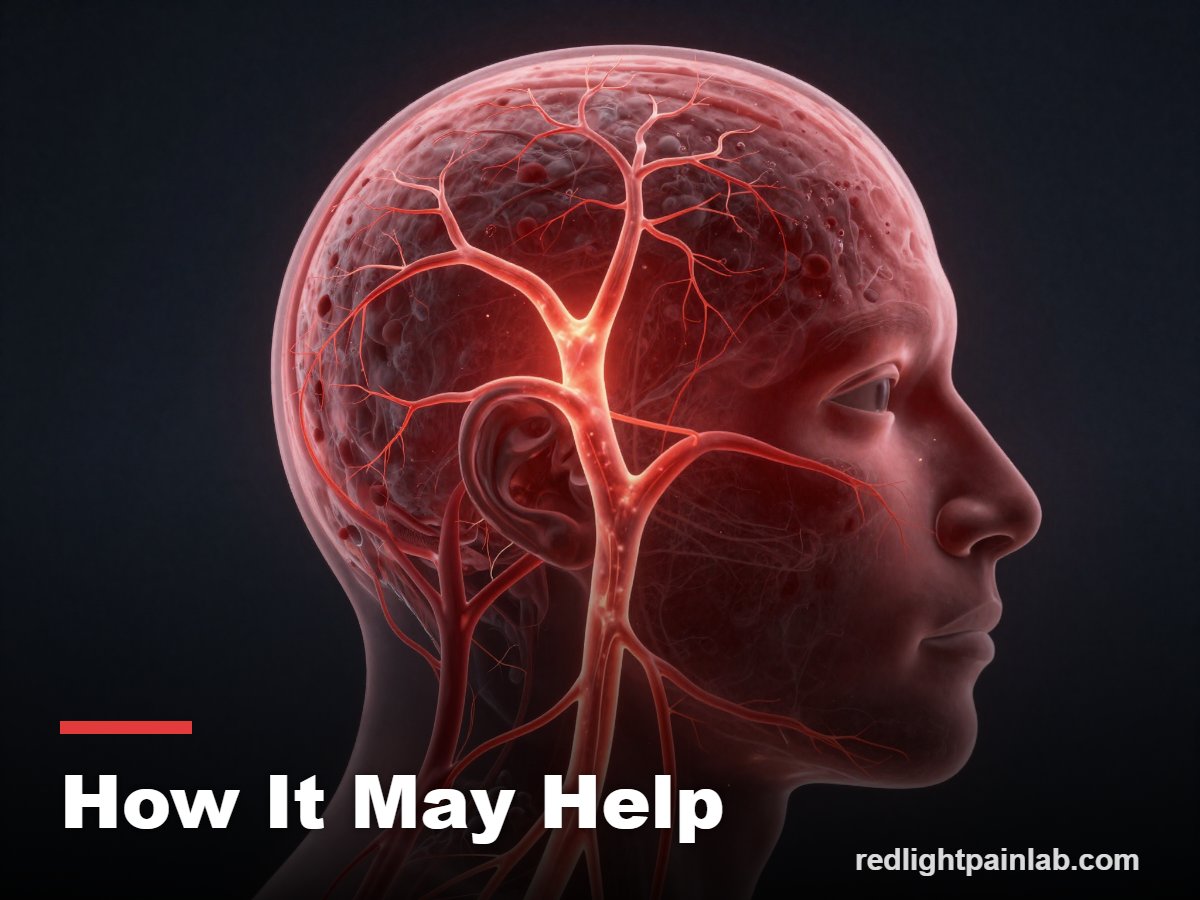
The mechanism is plausible, which is why researchers are interested. Red and near-infrared light is absorbed by your mitochondria and can influence several things that are relevant to migraine:
- Blood flow. It can promote local vasodilation and circulation, and blood-flow changes are part of migraine physiology.
- Nitric oxide. It modulates nitric oxide, a signaling molecule involved in headache pathways.
- Neuroinflammation. In lab and animal studies it lowers pro-inflammatory signaling, which may calm sensitized nerves.
- Muscle and nerve tension. Applied to the neck and base of the skull, it targets the tight muscles and cervical structures that drive many tension-type and cervicogenic headaches, which often overlap with migraine.
That last point is the most practical one. A lot of “head pain” is partly driven by the neck. Using red light on stubborn neck and shoulder tension is a reasonable, low-risk thing to try, and it is where this therapy most plausibly earns its place.
How to use red light therapy for migraines safely
If you want to try it, do it the careful way:
- Protect your eyes. This is non-negotiable for migraine. Keep your eyes closed and use the opaque goggles that come with the device. Never look into the light.
- Target tissue, not eyes. Apply it to the back of the neck, the base of the skull, the temples, or the shoulders, the muscular and cervical areas, rather than the front of the face or eyes.
- Keep sessions short. Start with 5 to 10 minutes and see how you respond. With migraine, more is not better.
- Use it between attacks, cautiously during. Many people find tissue-applied light easier to tolerate as prevention on the neck and shoulders. During an active migraine, sensitivity is high, so go gently or skip it.
- Track your response. Migraine triggers are individual. Keep a simple log so you can tell whether it helps, does nothing, or aggravates you, and stop if it is the last one.

Who should be careful
Talk to your doctor or neurologist before trying red light therapy for migraine if your migraines are frequent or severe, if you have an aura, if you are pregnant, or if you take photosensitizing medication. Red light therapy is generally low-risk for tissue use, but migraine is a neurological condition that deserves real medical management, light therapy is at most a complement to it, never a replacement for your prescribed care. And to repeat the key point: if light makes your migraines worse, this is not the therapy for you.
Devices we recommend
For migraine and head or neck use, a smaller, targeted device or a panel you can position at the neck and shoulders is more practical than a large full-body panel, and eye protection matters more than usual. We rank devices on near-infrared output, irradiance, and independent testing rather than brand. See our current picks in the top 5 red light therapy devices for pain, and because so much head pain is really neck-driven, our guide to red light therapy for inflammation is worth a read too.
What people say on Reddit
Migraine-specific threads are rare, but head, neck, and chronic-pain communities discuss red light therapy regularly. These are real, unpaid public discussions, useful for context, not proof. Links go to the original threads.
r/Hypermobility
A discussion about headaches that originate in the neck, the exact overlap where neck-applied red light is most often tried.
r/redlighttherapy
Has red light therapy helped your stiff neck?
Users compare notes on red light for neck stiffness and tension, a common driver of tension-type and cervicogenic head pain.
r/ChronicPain
What helps you or has helped you with chronic pain?
A broad chronic-pain thread where red light therapy comes up among the things people have tried.
Disclaimer: The Reddit posts above are third-party personal discussions shared by individual users. They are anecdotal, not medical evidence. Results vary and are not verified or endorsed by RedLightPainLab. Always consult a qualified professional before starting red light therapy.
Frequently asked questions
Does red light therapy help migraines?
The evidence is early and low-certainty. A systematic review of trials found photobiomodulation had an effect on headache pain versus a placebo device, but with low certainty, so it is promising, not proven. It is best used on the neck and head tissue, with eyes protected, as an add-on.
Can red light make a migraine worse?
Yes, if it goes into your eyes. For migraine sufferers, red and blue light are the most aggravating colors visually. Always keep your eyes closed and use opaque goggles, and apply the light to tissue (neck, temples, shoulders), not toward your eyes.
Is green light better than red light for migraine?
For relief through the eyes, yes. Narrow-band green light is the color with human evidence for reducing migraine pain and photophobia. Red and near-infrared light therapy is a separate, tissue-based approach.
Where should I apply red light therapy for a headache?
The back of the neck, the base of the skull, the temples, and the shoulders, the muscular and cervical areas, since a lot of head pain is neck-driven. Keep sessions short (5 to 10 minutes) and protect your eyes.
Is red light therapy FDA approved for migraines?
No. Home red light panels are FDA registered as general wellness devices, not cleared or approved to treat migraine.
References
- Pires de Sousa MV, et al. Photobiomodulation for the treatment of primary headache: systematic review of randomized clinical trials. (PMC8781567) Link
- Harvard Medical School. Green Light for Migraine Relief (Burstein lab research on light color and migraine pain). Link
- Narrow band green light effects on headache, photophobia, sleep, and anxiety among migraine patients: an open-label study. Frontiers in Neurology, 2023. Link
Medical disclaimer: This article is for information only and is not medical advice. Red light therapy panels are FDA registered as general wellness devices, not cleared or approved to treat migraine. Migraine is a neurological condition, consult a qualified healthcare professional before starting any new treatment.