
By the RedLightPainLab Research Team · Published June 10, 2026 · Last updated June 10, 2026
Affiliate disclosure: Some links below are affiliate links. We may earn a commission at no extra cost to you. We are independent; rankings are based on our methodology and are never paid for.
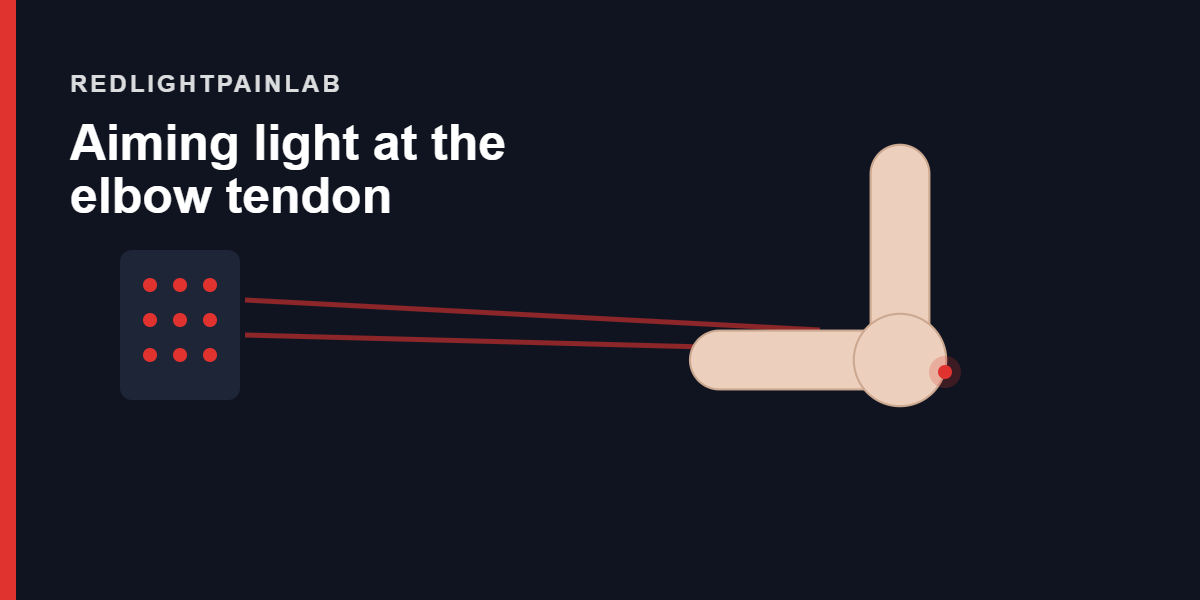
Red light therapy, also called photobiomodulation or low-level laser therapy (LLLT), can ease elbow pain, and the best evidence is for tennis elbow. A meta-analysis found that aiming the right wavelength directly at the elbow tendon gave short-term pain relief and less disability. Golfer’s elbow is the less-studied counterpart. Use it on the sore bony bump of the elbow for about 10 to 15 minutes most days, alongside rehab exercises.
The short version
- Most elbow pain is tendon pain: tennis elbow on the outer side and golfer’s elbow on the inner side.
- Tennis elbow has the strongest evidence. A meta-analysis found short-term pain relief and less disability when the light hit the tendon.
- Aim and wavelength matter. The tendon sits near the surface, so red and 904 nm near-infrared work; off-target aiming and the wrong wavelength did not.
- It works best with rehab exercises, not on its own.
- It eases symptoms and is low risk; it does not replace loading the tendon back to strength.
Does red light therapy work for elbow pain?
For tennis elbow, the answer is a qualified yes. A 2008 meta-analysis in BMC Musculoskeletal Disorders pooled 13 randomized placebo-controlled trials (730 patients) and found low-level laser therapy reduced pain by about 10.2 mm on a 100 mm scale overall, rising to about 17.2 mm in the trials that aimed a 904 nm laser directly at the tendon insertion, with more patients reporting global improvement (relative risk 1.53) and no serious side effects (Bjordal et al., 2008). Broader tendon research agrees that, added to exercise, photobiomodulation improves pain and function in tendinopathy (tendinopathy meta-analysis, 2021).
The honest read: the effect is real but modest and short-term, and it depends on hitting the tendon with the right wavelength. Golfer’s elbow has far less direct research, so treat the evidence there as borrowed from tennis elbow.
What is causing your elbow pain?
Most stubborn elbow pain is a tendon problem from overuse, and which side hurts tells you which one.
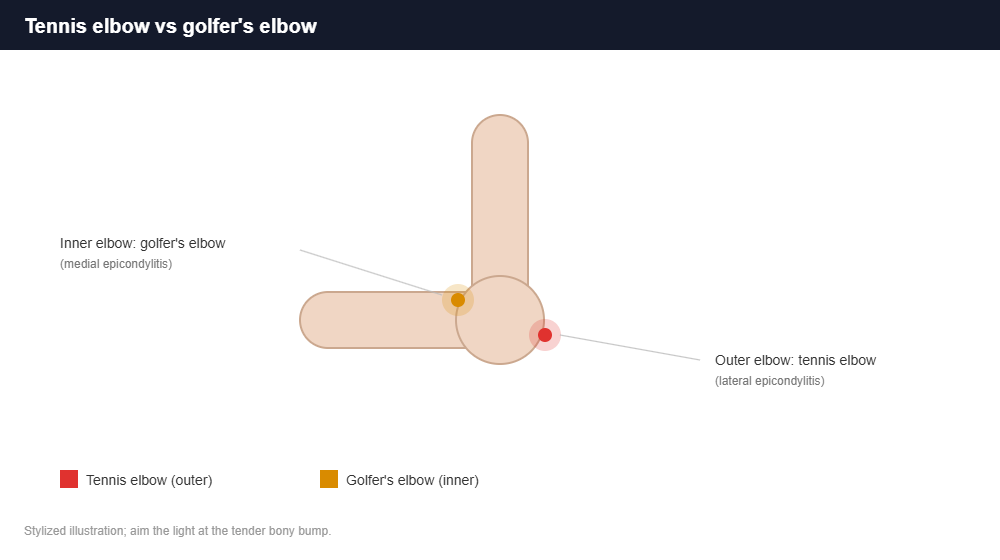
- Tennis elbow (lateral epicondylitis) is pain on the outer elbow, where the wrist-extensor tendons attach. See our tennis elbow guide.
- Golfer’s elbow (medial epicondylitis) is pain on the inner elbow, where the wrist-flexor tendons attach. See our golfer’s elbow guide.
- Other causes include bursitis, nerve irritation, or, less often, arthritis. If your pain follows an injury, locks, or comes with numbness, get it checked.
How does it ease elbow pain?
It works at the cell level. Red and near-infrared light is absorbed by cytochrome c oxidase in the mitochondria, which raises ATP, improves local blood flow, and helps calm inflammation (Hamblin, 2018). For a strained tendon, that can mean less pain and a better environment for the tendon to repair, especially when you are also loading it with rehab exercises. It does not rebuild the tendon on its own.
What does the evidence show?
Here is the elbow breakdown.
What wavelength, and where do you aim it?
The elbow tendon attaches at a bony bump just under the skin, so depth is not the challenge here, aim is. The tennis elbow trials worked when they pointed red light (around 660 nm) or 904 nm near-infrared straight at the sore tendon insertion. Notably, the deepest wavelengths and off-target aiming did not help in those trials, which is a useful reminder that for a shallow tendon, hitting the exact spot matters more than maximum penetration. Find the tender bony bump on the side of your elbow and treat right there.
How to use red light therapy on your elbow
- Find the sore bony bump on the outer (tennis) or inner (golfer’s) elbow.
- Use a device with red and near-infrared light; a small panel or a wrap that hugs the elbow works well.
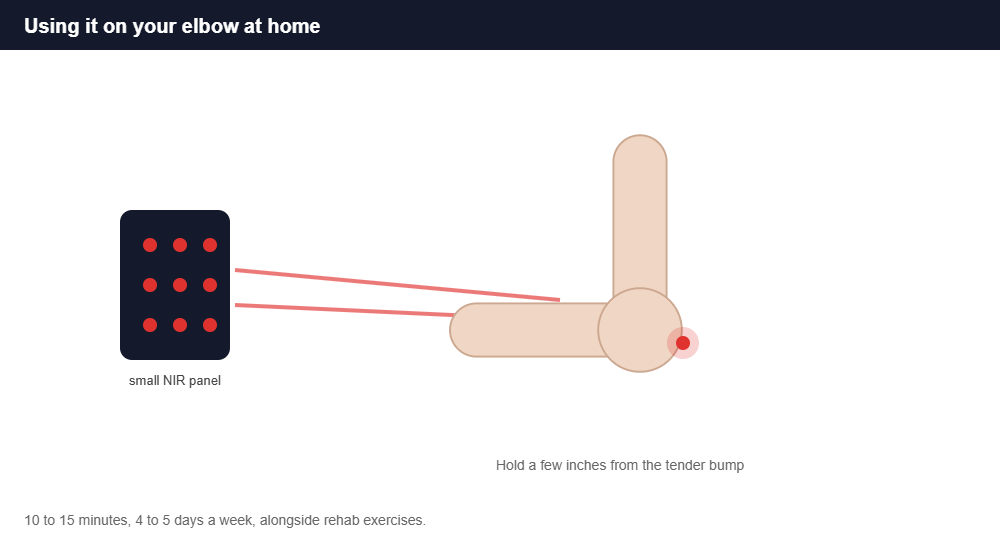
- Hold it close, a few inches from the skin, right over the tender spot.
- Treat 10 to 15 minutes per session, about 4 to 5 days a week.
- Pair it with rehab, especially the eccentric strengthening exercises that load the tendon.
- Give it 4 to 8 weeks, then reassess.
Is it safe? Who should skip it?
The elbow trials reported no serious side effects, so it is low risk. The occasional issue is minor warmth or brief redness. Wear eye protection with bright panels, and see a clinician first if your pain came from a fall or injury, if your elbow locks or gives way, or if you have numbness or tingling, which can point to a nerve problem rather than a tendon.
What does it cost?
Expect to pay out of pocket, since insurance rarely covers it. The good news for the elbow is that you do not need a large panel, a small panel or an elbow wrap is enough and keeps the cost down.
Choosing a device for elbow pain
For the elbow, look for both red and near-infrared light and a form factor that hugs the joint, a small panel or a wrap, with third-party-tested specs. See our device rankings. As an independent site, our current overall pick is the RLT Home TotalSpectrum. For related tendon and joint pain, see our guides to tennis elbow, golfer’s elbow, and knee pain.
Frequently asked questions
Does red light therapy work for elbow pain?
For tennis elbow, yes, modestly and short-term: a meta-analysis of 13 trials found pain relief and less disability when the light hit the tendon. Golfer’s elbow has less direct evidence. Use it alongside rehab exercises.
Where do I aim it on my elbow?
At the tender bony bump, on the outer elbow for tennis elbow or the inner elbow for golfer’s elbow. The tendon is shallow, so aim matters more than depth.
How long until it helps elbow pain?
Give it a few weeks. Try 10 to 15 minutes per session, 4 to 5 days a week, for 4 to 8 weeks, alongside strengthening exercises, then reassess.
Can it replace physical therapy for the elbow?
No. The evidence is strongest when light is added to exercise. Loading the tendon with rehab, especially eccentric exercises, is the core treatment; light therapy is a helper.
Is red light therapy FDA approved for elbow pain?
Red light therapy panels are FDA registered, not FDA cleared or approved. A few medical laser units carry 510(k) clearance, but consumer panels do not.
References
- Bjordal JM, et al. A systematic review with procedural assessments and meta-analysis of low level laser therapy in lateral elbow tendinopathy (tennis elbow). BMC Musculoskeletal Disorders. 2008;9:75. PubMed
- The effect of low-level red and near-infrared photobiomodulation on pain and function in tendinopathy: a systematic review and meta-analysis of RCTs. 2021. PMC
- Hamblin MR. Mechanisms and mitochondrial redox signaling in photobiomodulation. Photochemistry and Photobiology. 2018;94(2):199-212. PMC
Medical disclaimer: This article is for informational purposes only and is not medical advice. Always consult a qualified healthcare professional before starting any new treatment, including red light therapy.
Affiliate disclosure: We earn a small commission when you buy through our links, at no extra cost to you. Rankings are never influenced by commission rates.