
By the RedLightPainLab Research Team · Published June 10, 2026 · Last updated June 10, 2026
Affiliate disclosure: Some links below are affiliate links. We may earn a commission at no extra cost to you. We are independent; rankings are based on our methodology and are never paid for.
Red light therapy, also called photobiomodulation or low-level laser therapy (LLLT), can ease tennis elbow (lateral epicondylitis). A meta-analysis of 13 trials found that aiming 904 nm near-infrared, or red light, directly at the sore tendon insertion gave short-term pain relief and less disability, especially alongside exercise. Treat the outer elbow for about 10 to 15 minutes most days, and keep doing your rehab.
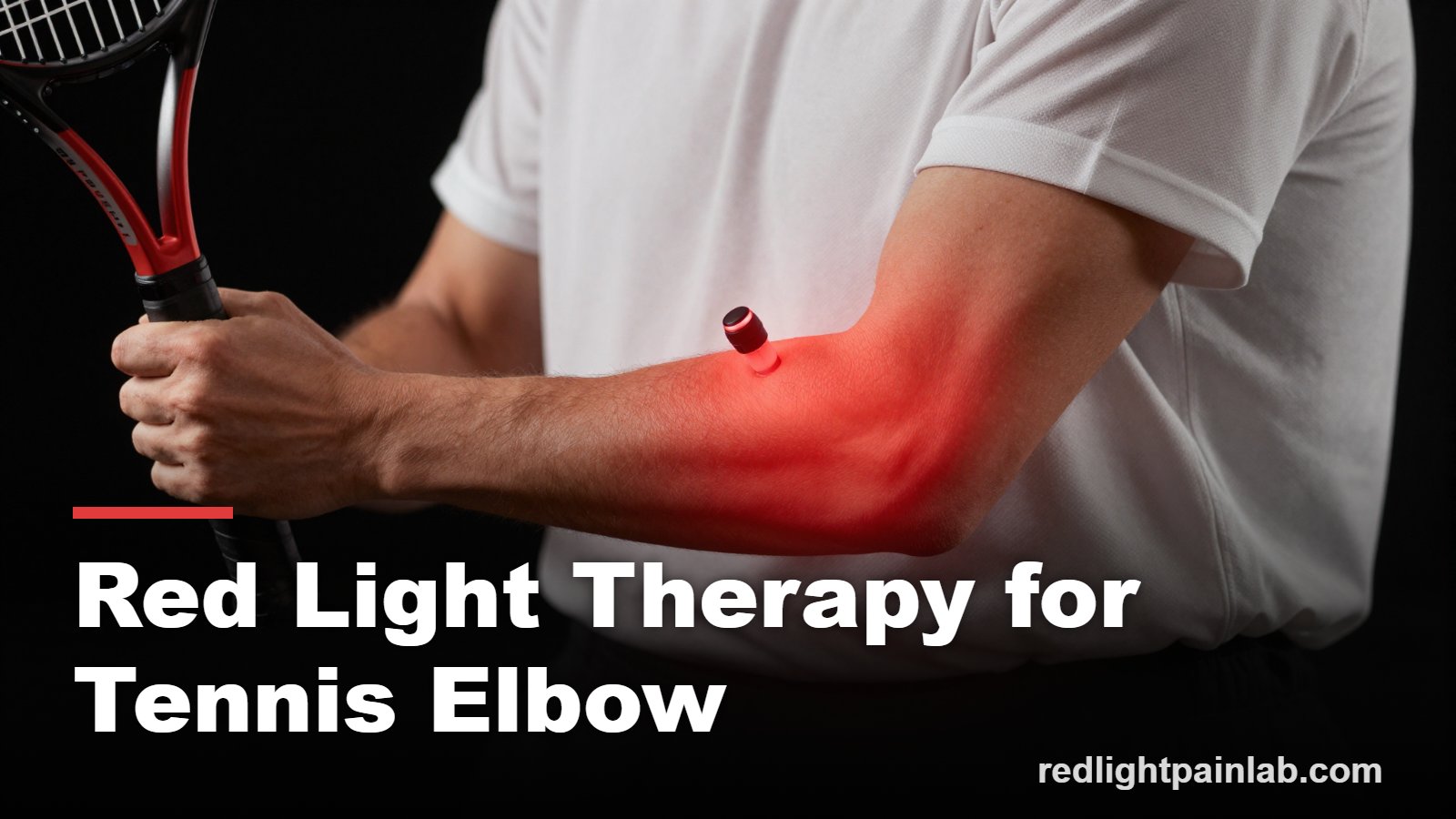
Table of Contents
The short version
- Tennis elbow has the strongest red light evidence of any elbow problem.
- A 2008 meta-analysis (13 trials, 730 people) found pain relief, less disability, and better grip strength, with no serious side effects.
- Aim is everything: pointing the light at the tendon insertion worked; off-target aiming and the wrong wavelength did not.
- The wins were biggest with 904 nm aimed at the tendon, alone or with exercise.
- It is a helper. Loading the tendon with rehab exercises is the core fix.
Does red light therapy work for tennis elbow?
Yes, modestly and short-term, when it is done right. A 2008 meta-analysis in BMC Musculoskeletal Disorders pooled 13 randomized placebo-controlled trials (730 patients). Overall, low-level laser therapy reduced pain by about 10.2 mm on a 100 mm scale versus placebo and made global improvement about 1.4 times more likely. In the trials that aimed a 904 nm laser directly at the lateral elbow tendon insertion, pain fell further, by about 17.2 mm, and patients were about 1.5 times more likely to report improvement (relative risk 1.53). Grip strength, pressure tolerance, and follow-up at 3 to 8 weeks all favored that group, with no serious side effects (Bjordal et al., 2008).
Why aim and wavelength matter so much
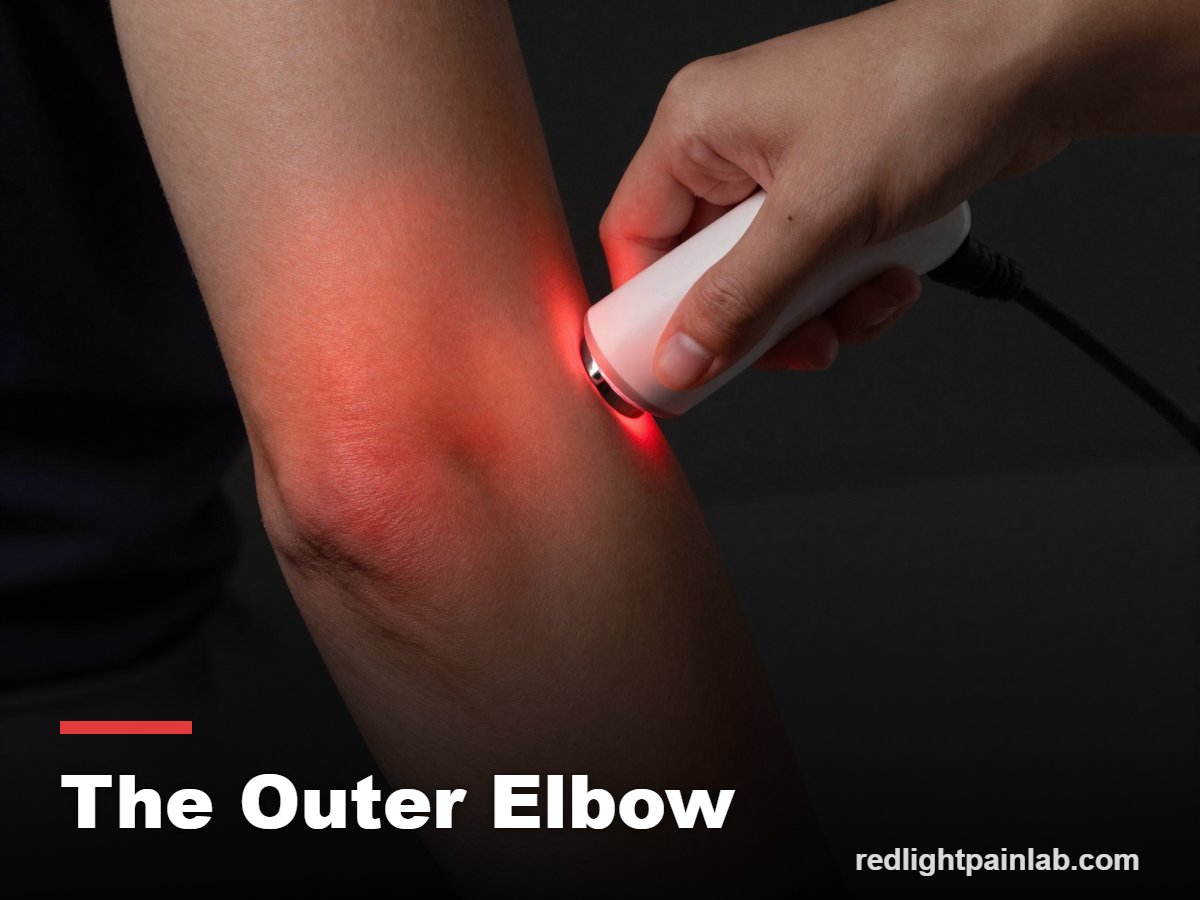
The most useful lesson from the research is that how you use it decides whether it works. In the same review, trials that aimed at acupuncture points instead of the tendon, or used wavelengths of 820, 830, or even 1064 nm, showed no benefit. The wins came from pointing red light or 904 nm near-infrared straight at the sore tendon insertion. Because that tendon sits just under the skin, you do not need deep penetration here; you need accurate aim at the exact tender spot. This is also why a small, well-aimed device can beat a big panel for tennis elbow.
How does it ease tennis elbow?
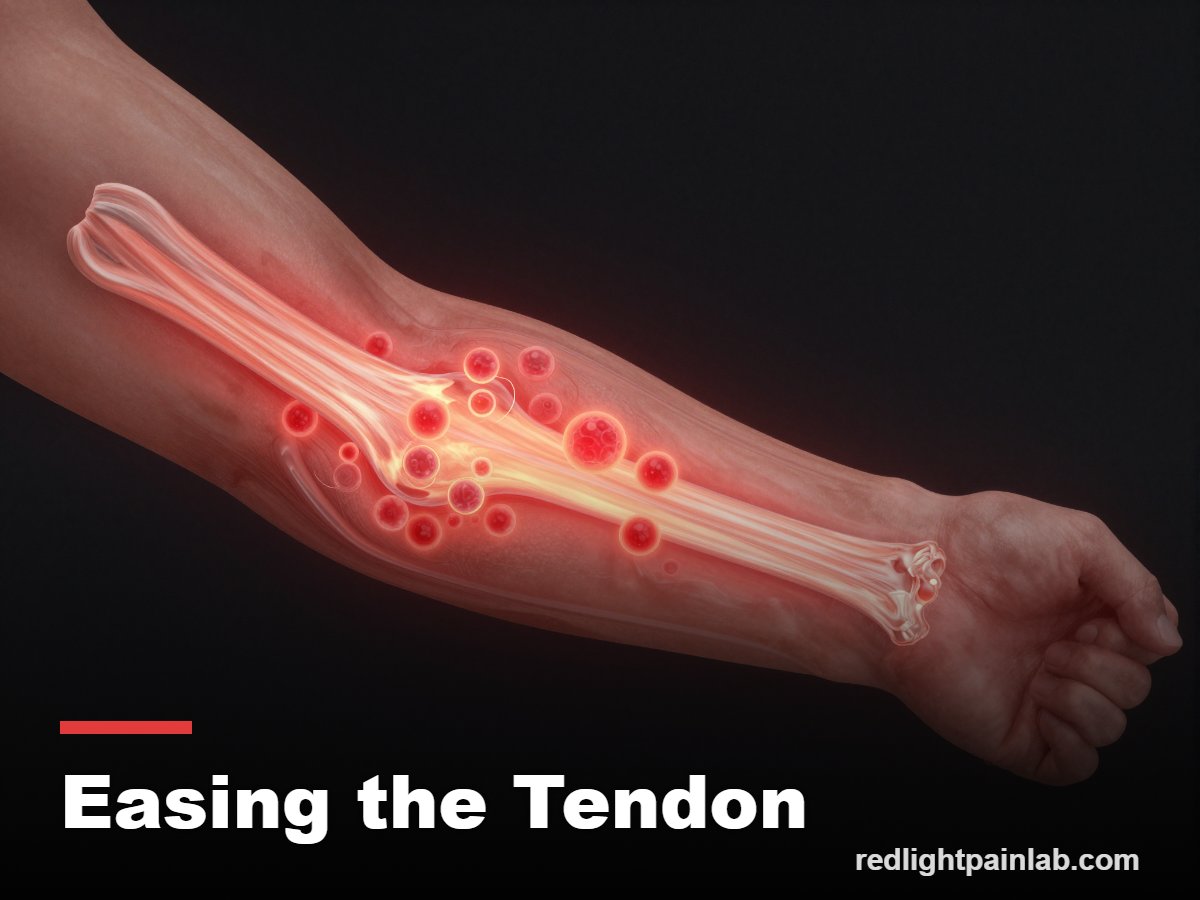
Red and near-infrared light is absorbed by cytochrome c oxidase in the mitochondria, which raises ATP, improves local blood flow, and helps calm inflammation (Hamblin, 2018). For an overloaded extensor tendon, that can mean less pain and a better healing environment, particularly when you are also loading the tendon with rehab. Broader tendon research backs this up: added to exercise, photobiomodulation improves pain and function in tendinopathy (tendinopathy meta-analysis, 2021).
Where is the spot, and how to use it
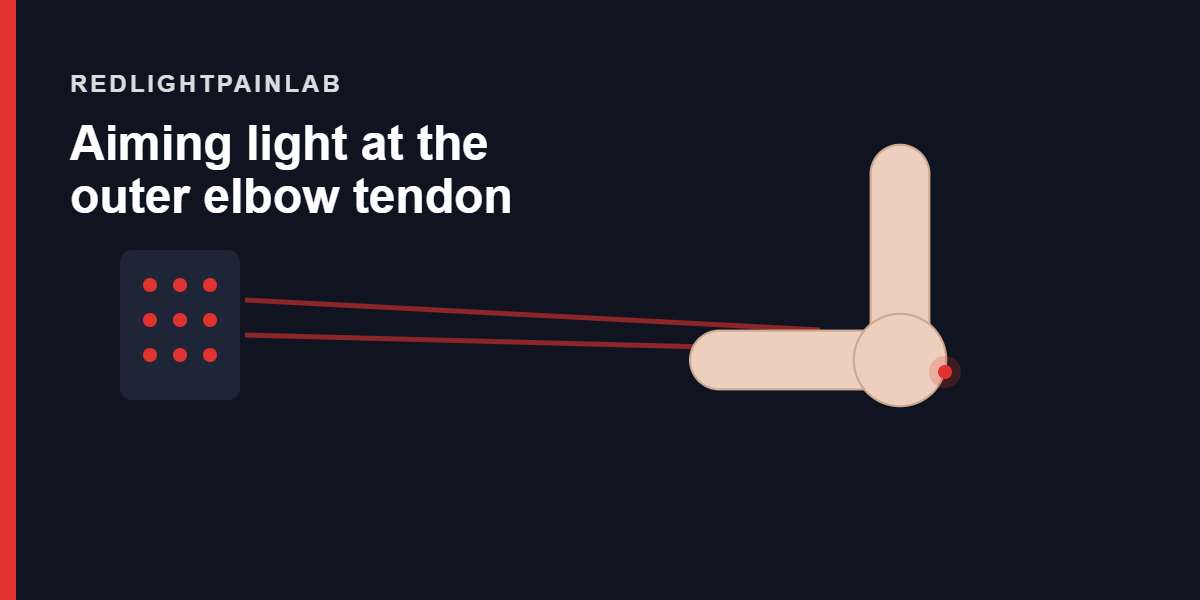
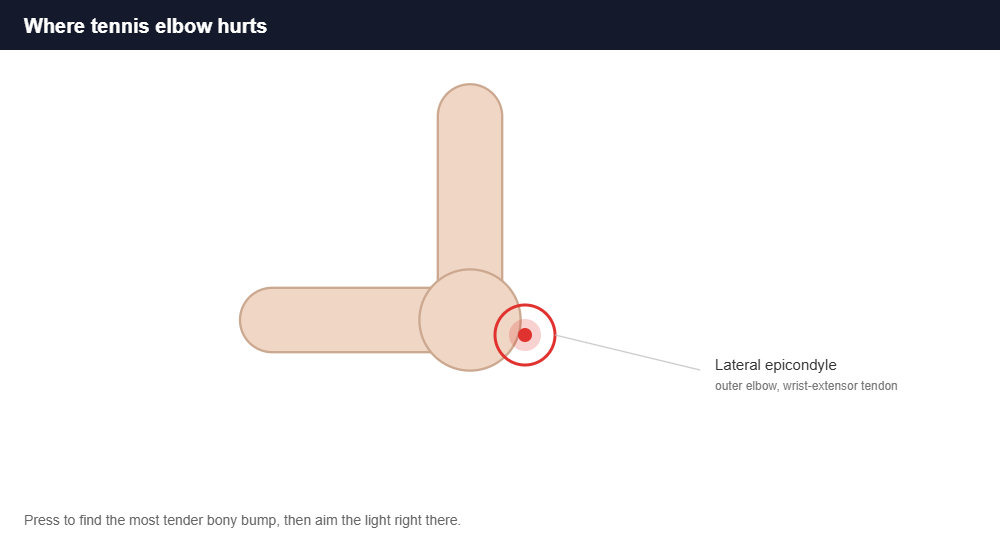
Tennis elbow pain centers on the lateral epicondyle, the bony bump on the outer side of your elbow, where the wrist-extensor tendons attach. Press around and find the most tender point; that is your target.
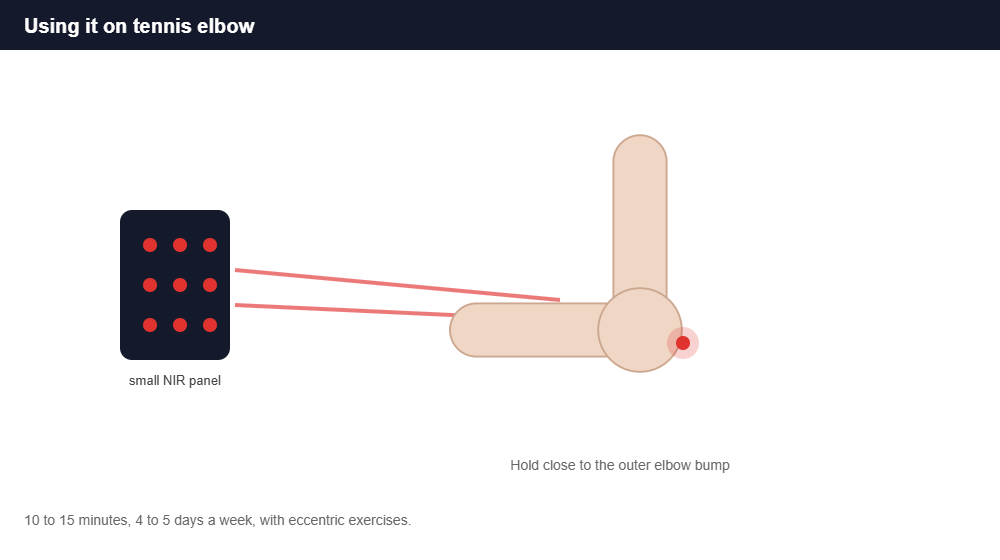
- Use a device with red and near-infrared (ideally including 904 nm or similar); a small panel or an elbow wrap works well.
- Hold it close, a few inches from the skin, right over the tender bump.
- Treat 10 to 15 minutes per session, about 4 to 5 days a week.
- Pair it with eccentric wrist-extensor exercises, the loading that rebuilds the tendon.
- Give it 4 to 8 weeks, then reassess.
Is it safe?
The trials reported no serious side effects, so it is low risk. Expect at most mild warmth or brief redness. Wear eye protection with bright panels, and see a clinician if your pain followed an injury, if the elbow locks, or if you have numbness or tingling, which can point to a nerve issue rather than the tendon.
What does it cost?
Expect to pay out of pocket. For tennis elbow you do not need a large panel, a small panel or an elbow wrap is enough and keeps the cost low.
Choosing a device for tennis elbow
Prioritize red and near-infrared light and a form factor that hugs the elbow, a small panel or wrap, with third-party-tested specs. See our device rankings. As an independent site, our current overall pick is the RLT Home TotalSpectrum. For the wider picture, see our guides to elbow pain, golfer’s elbow, and knee pain.
Real Red Light Therapy Experiences on Reddit
Real, unpaid discussions about red light therapy for elbow and tendon pain on Reddit. Anecdotal context, not proof. Links go to the original threads.
r/redlighttherapy
A thread on using red light for joint and tendon pain, relevant to tennis elbow.
r/redlighttherapy
RLT before/during/post workout has been a game changer
An active user shares how red light around training helped tendon recovery.
r/golf
Anyone here tried red light therapy for joint pain?
Golfers and racket-sport players, prone to elbow tendon pain, share their experiences.
Disclaimer: The Reddit posts above are third-party personal discussions shared by individual users. They are anecdotal, not medical evidence. Results vary and are not verified or endorsed by RedLightPainLab. Always consult a qualified professional before starting red light therapy.
Frequently asked questions
Does red light therapy work for tennis elbow?
Yes, modestly and short-term, when aimed at the tendon. A meta-analysis of 13 trials found pain relief, less disability, and better grip strength, with the biggest effect when 904 nm was pointed at the tendon insertion. Use it alongside exercise.
Where do I aim it for tennis elbow?
At the lateral epicondyle, the tender bony bump on the outer elbow. The tendon is shallow, so accurate aim matters more than deep penetration.
How often and how long?
About 4 to 5 days a week, 10 to 15 minutes per session, for 4 to 8 weeks, alongside eccentric strengthening, then reassess.
Can it replace tennis elbow exercises?
No. Loading the tendon with rehab, especially eccentric exercises, is the core treatment. Red light therapy is a helper that research supports most when added to exercise.
Is red light therapy FDA approved for tennis elbow?
Red light therapy panels are FDA registered, not FDA cleared or approved. A few medical laser units carry 510(k) clearance, but consumer panels do not.
References
- Bjordal JM, et al. A systematic review with procedural assessments and meta-analysis of low level laser therapy in lateral elbow tendinopathy (tennis elbow). BMC Musculoskeletal Disorders. 2008;9:75. PubMed
- The effect of low-level red and near-infrared photobiomodulation on pain and function in tendinopathy: a systematic review and meta-analysis of RCTs. 2021. PMC
- Hamblin MR. Mechanisms and mitochondrial redox signaling in photobiomodulation. Photochemistry and Photobiology. 2018;94(2):199-212. PMC
Medical disclaimer: This article is for informational purposes only and is not medical advice. Always consult a qualified healthcare professional before starting any new treatment, including red light therapy.
Affiliate disclosure: We earn a small commission when you buy through our links, at no extra cost to you. Rankings are never influenced by commission rates.